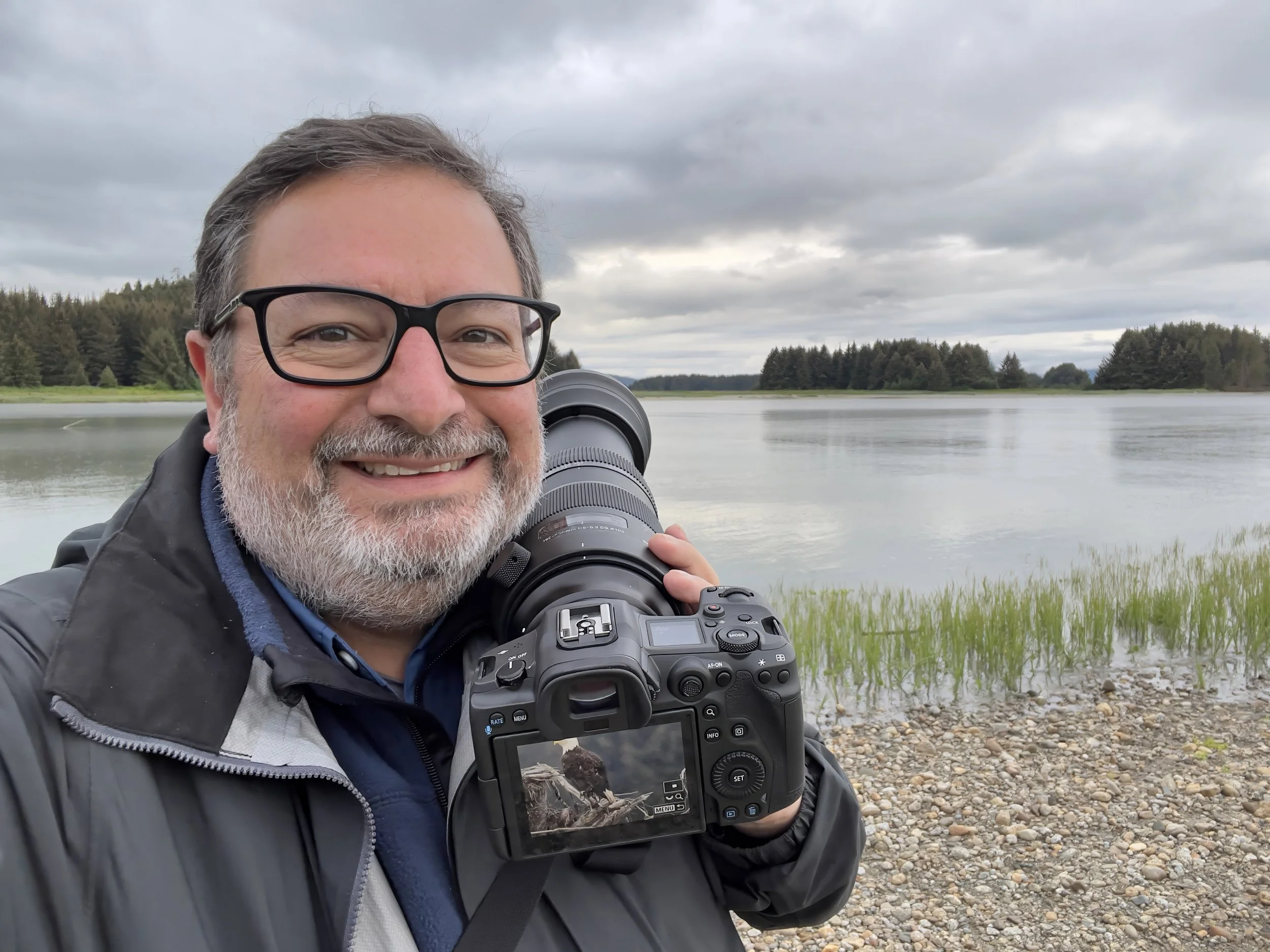
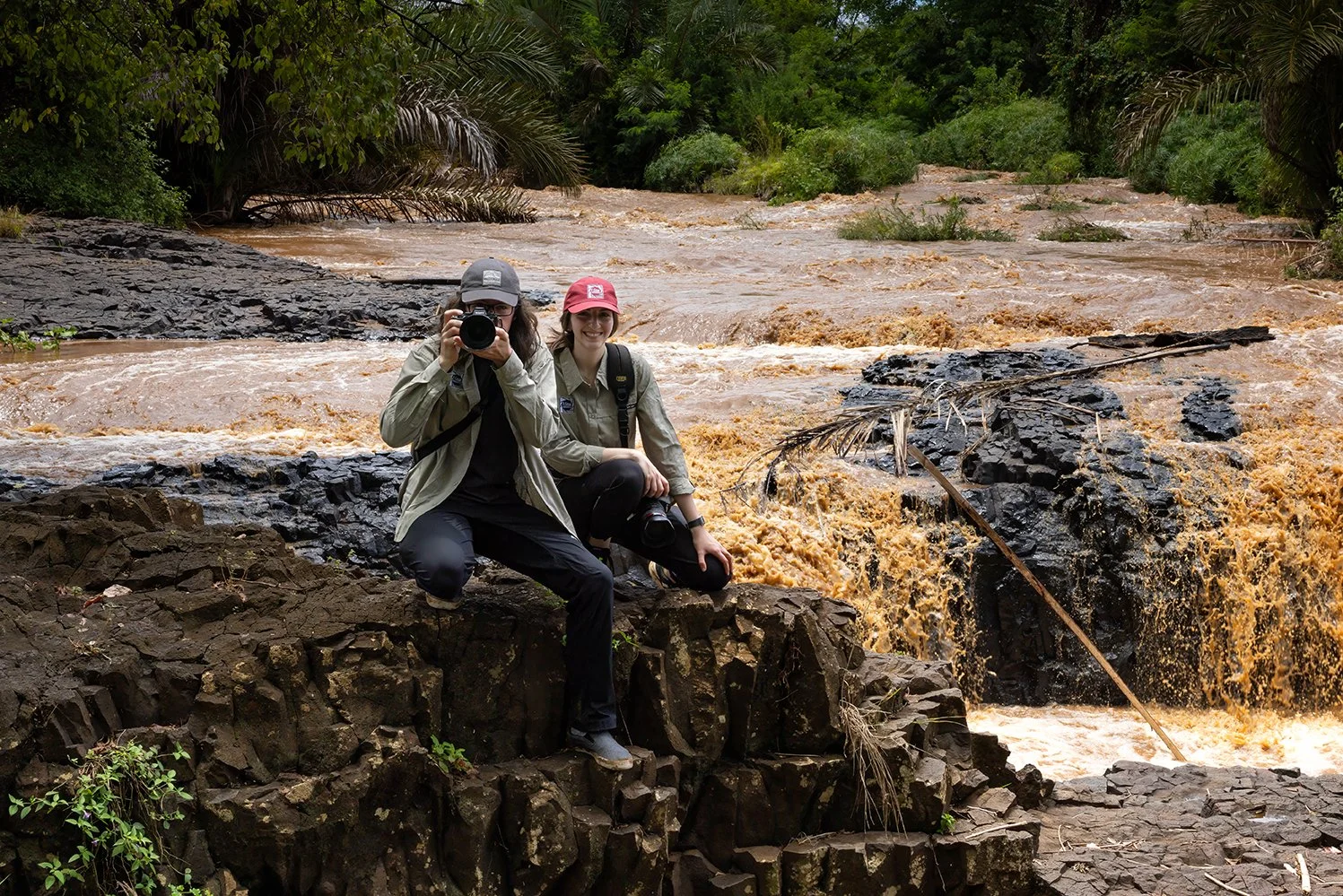
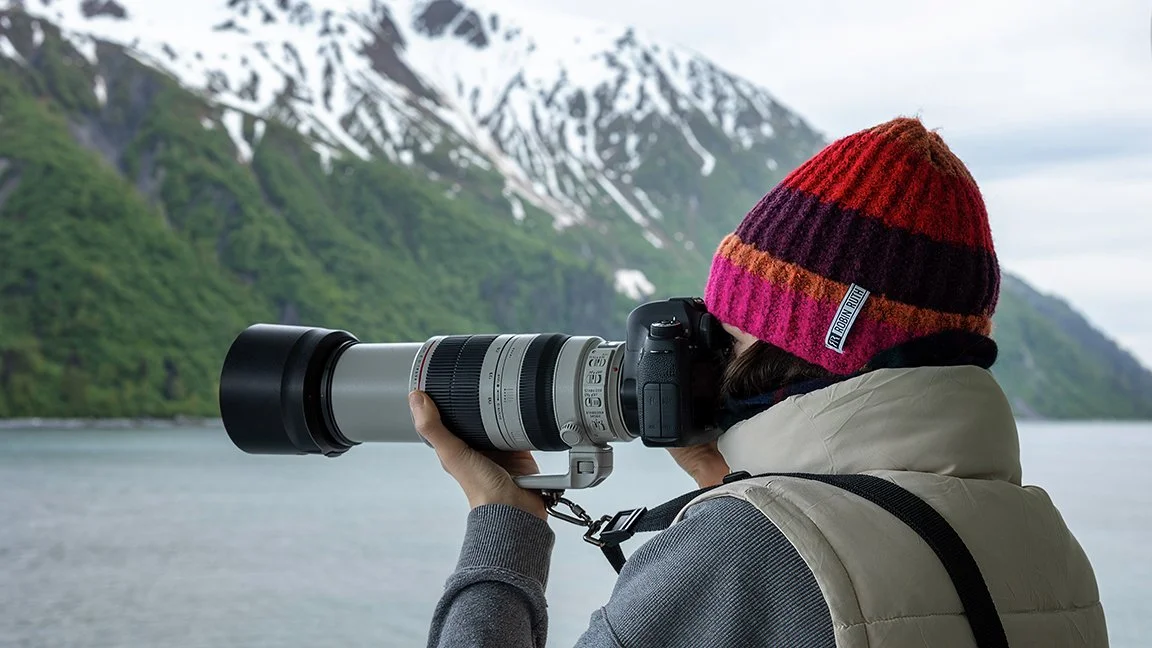
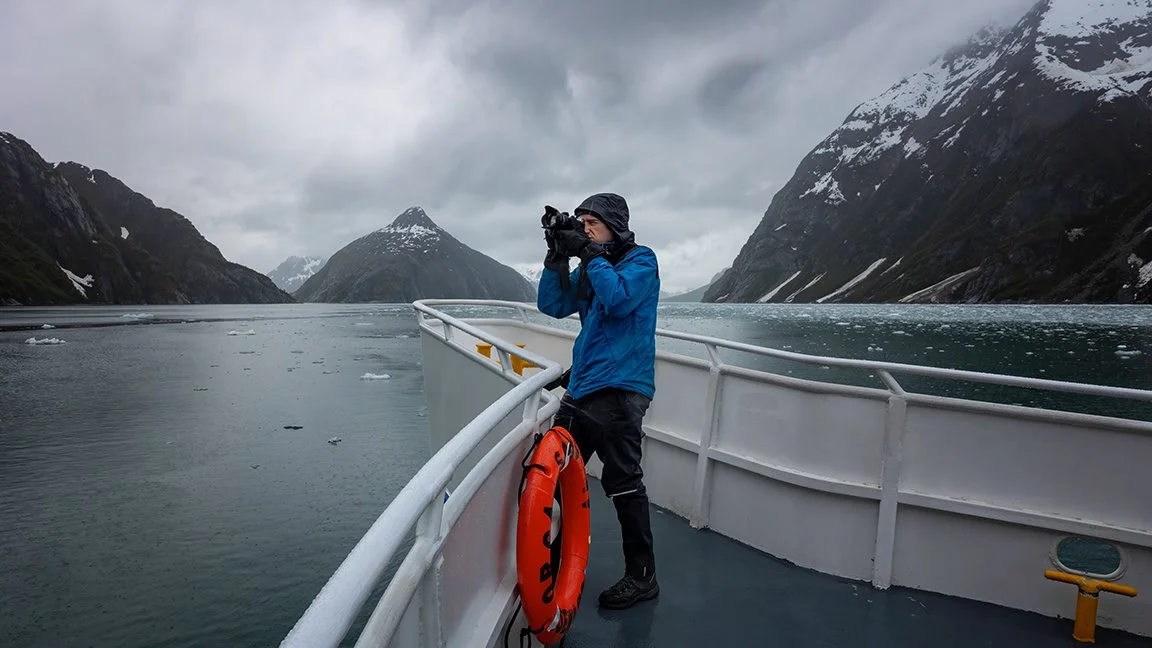
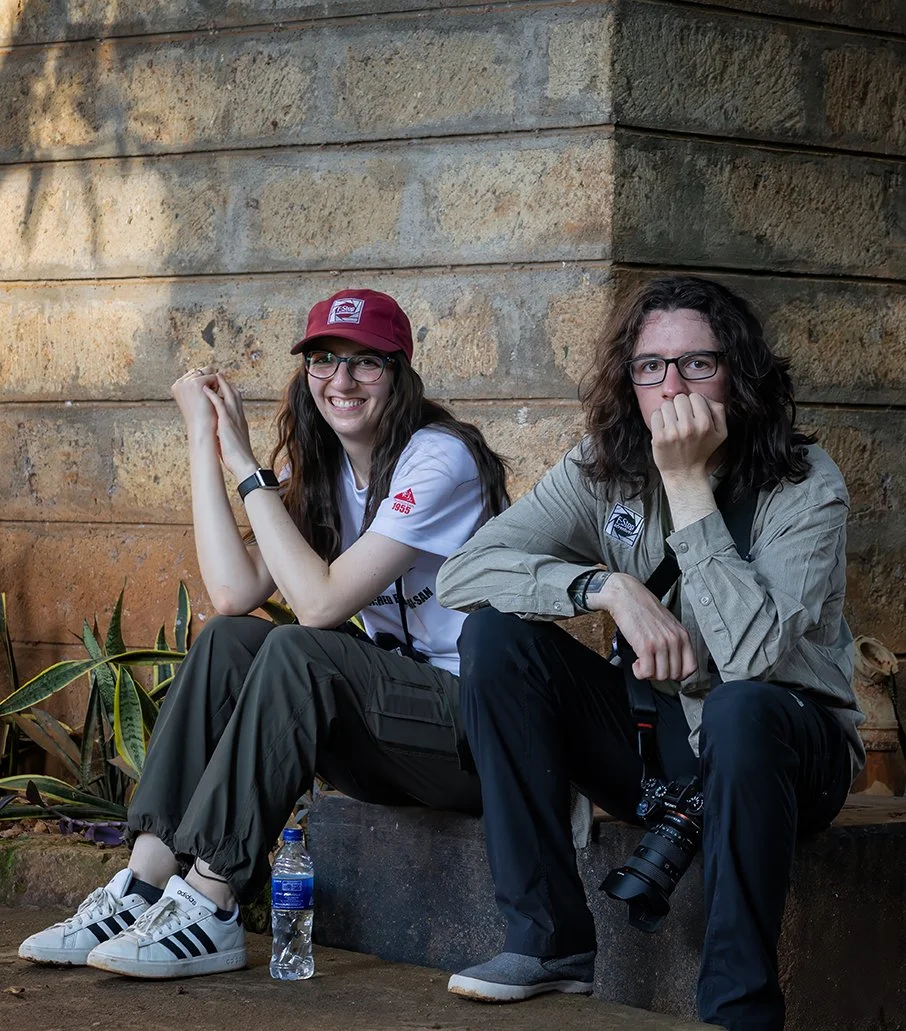
Meghan and Benjamin grew up in Scotland, following William into places most people only see in photographs — documentary work in China and Kenya, wildlife in Africa, Alaska, and Hawaii. Fieldcraft wasn't something they were taught in a classroom. It was modeled constantly in the field, absorbed alongside the kind of situational awareness that becomes instinct before you're old enough to name it.
Meghan's background in Marine Biology — including extensive field research on both cetaceans and pinnipeds at the graduate and undergraduate level — gives her a depth of knowledge about marine mammal behavior that goes well beyond what years on the water alone can teach. Her research wasn't confined to the classroom. It was conducted in the field, on the water, in the conditions that actually matter. That foundation produces something difficult to teach: the ability to read predictive behavior — to see what's coming before it arrives. On the water, that instinct is everything.
Benjamin's seven years as a research engineer means that when the light shifts and your settings need to move with it, he's already there — not reacting, but ready. He brings the same analytical precision to the field that he applies to complex technical problems: methodical preparation, pattern recognition, and the discipline to stay focused when conditions get difficult. His raptor work — eagles and osprey specifically — runs directly through the heart of what F-Stop Adventures offers in Kachemak Bay, and his eye for behavioral anticipation in fast-moving subjects translates directly to everything we do on the water.
Between them, they've logged hundreds of hours observing humpback whales in Alaska and Hawaii. They didn't set out to become guides. They grew up doing the work. The guiding followed naturally.